

 On Saturday, I’ll be at the Fiber Frolic at Beaver Lake Nature Center, demonstrating spinning and doing a variety of things fiber-y for people’s entertainment.
The Golden Fleece Spinners Society will have a story loom for public use. It’s lots of fun, so come and add a few rows. You can use these Leicester locks which I’m dyeing today to add some colorful texture.
Thanks to Heather at Lochan Mor Farms for donating fiber for demonstrations! 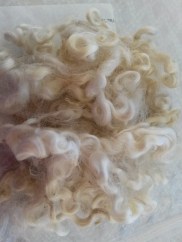
These are gorgeous locks. They are bright white with creamy tips and a firm structure. Dyeing multicolored locks is all about the wide bottomed pot and leaving the locks alone while the dye does its thing.
Directions:
Fill the bottom of your pot with a few inches of water and add citric acid. Pre-acidifying the water will make the color strike quickly. This means that some areas are going to take up more dye than others.
Put locks in and let them soak for at least 30 minutes.
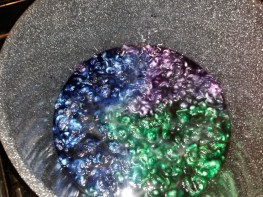
When you are ready to dye, add just enough water to keep the locks wet, not enough so that they are floating freely. Sprinkle dye powder in a few places and use a wooden skewer to gently spread the locks a bit and disperse the dye without sending it over into the other areas of the pot. You can also add concentrated liquid dye. I find the powder gives a better color variation.
Then, put in the temperature probe set to 180F, turn on medium heat and walk away until the probe beeps.
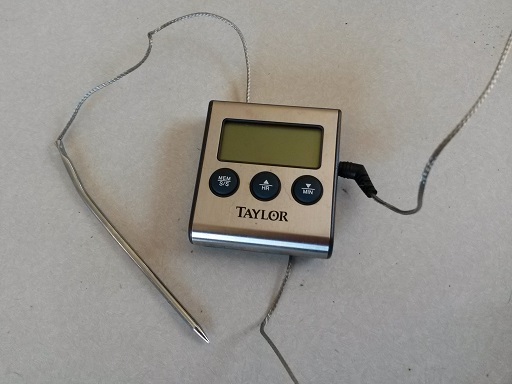
Here’s the spot in the process where I made a mistake. I was trying to do 27 things at once. I forgot to add the handy dandy temperature warning probe which is my solution to trying to multitask. The probe works by setting a goal temp- in this case 180F. The probe hangs out in the pot and when the temp reaches 180, the base starts beeping.
Lots of people dye without using the probe. You can just watch and wait until the pot almost comes to a boil and then turn down the heat. I know myself better than that.
Normally, the probe beeps, I catch the water before it boils, turn the heat down to low, and let the fiber sit in the hot, acidified water until
1) It reaches the color I would like,
2) the dye is exhausted & the water is clear or slightly milky, or
3) the fiber has absorbed all of the dye it is going to take.
It depends on the dye and the fiber, but that takes about 30-45 minutes- sometimes longer for a very saturated color. If the dye isn’t exhausting, you can try adding more citric acid. Or you may have used too much dye. *Or* it may need to cool down for the last of the dye to take.
Here’s the important part. After simmering, turn off the heat and walk away until the water cools to room temperature. If you need to reinforcement, set the temperature probe for 70 degrees and don’t touch until the probe give you permission.
Really. Don’t touch it. Every time you poke at it, you will start to open up the locks and either risk felting or ruin the lock structure.
Today, touching the cooling locks was not my problem. I forgot the probe but walked away waiting for the beep. This pot went to boil. Whoops! These locks are pretty resilient. It was tempting to start pulling on the fiber to see if it had felted. I was surprisingly good about it. I pulled the pot off the burner and walked away. (that’s unusual for me. I’m a prodder) Once it cooled, I was able to rinse thoroughly and get a rough idea of how things look.
 The saying is, “It isn’t felted until it is dry.” I’ll also add to that, “You don’t know the color until it dries.” In this case, everything still feels nice and loose. The colors are bright and have a nice variegated look. There may be some spots that are felted. Felting happens with heat and agitation. The boiling of the water was definitely adding agitation, so I’ll find out tomorrow if there are any sections that are locked up. If I start pulling on the locks today, I risk making any felting worse. So, it’s out in the sun with a kitty for company. The cat isn’t crazy about cold, wet wool in her sunbeam, but she’s agreed to share.


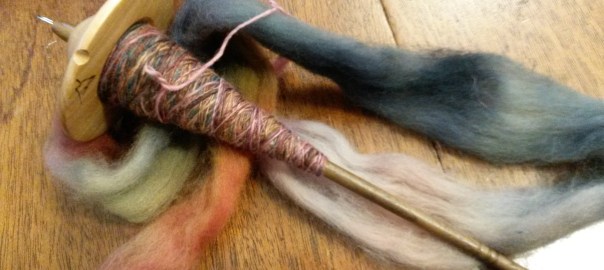
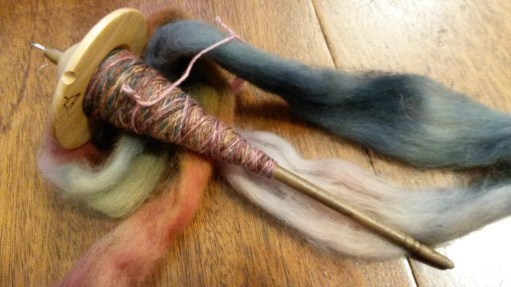
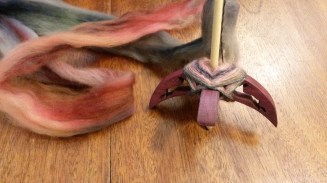 Some days spinning is very upbeat. I put on happy music, pick bright colors and shake off the funk of a crummy week. Other days, it’s meditative. No need for music. The wheel and spindle make their own sounds to pair up with the feel of the fiber moving across my hands. My thoughts drop away, and I am completely absorbed in the act of watching the yarn appear .
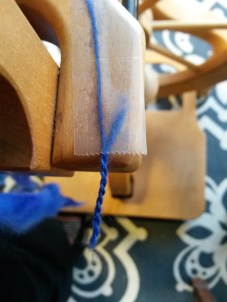
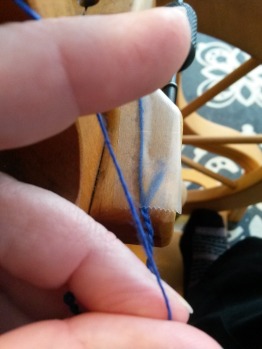 sight, reminding me of the goal. Every once in a while, I pull my yarn over to the sample and do a spot check. Then I check to make sure that I am keeping the density of the yarn the same. I can match the singles width, but the amount of fiber in that single will vary. (see upcoming post on Grist) This shows up when I ply, so I fold back the yarn on itself to make sure the plied yarn matches as well.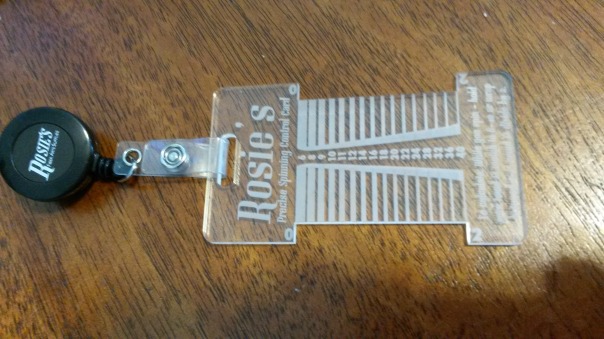

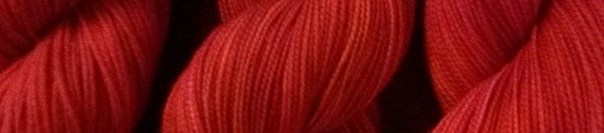
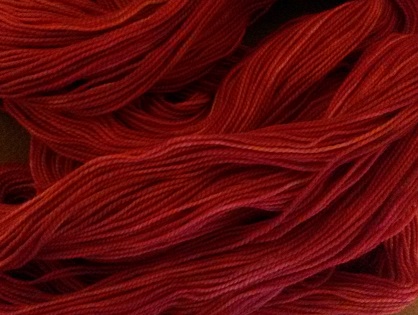
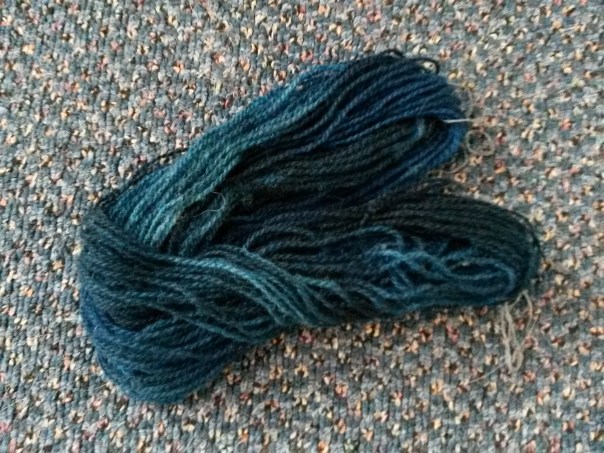
 Ah, the glamorous life of the indie fiber artist. I had scheduled a week for making videos about fiber and spinning. It wasn’t to be. No one wants to see pictures of my chopped up thumb or my burned hand. Instead, here’s a picture of some lipstick pink and red yarn I spun up doing demonstrations at a farmers market. Trust me. This is better.
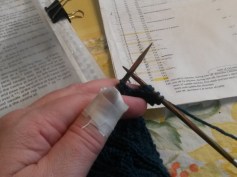 The past two weeks could have been called “painfully discovering 101 tasks that need two thumbs”. If ever a time for armpit knitting, this was it. Sadly, I don’t have super long needles!
 Life did not cooperate!. I had no luck opening jars, tying my shoes or zipping anything. I stupidly forced my swollen bandaged thumb into a pair of mittens and then got stuck. More disturbing, I developed a phobia regarding the knife involved. Here’s the psycho knife. I am convinced it has a taste for my blood. From this day forward, it is Bob’s job to pre-slice all bagels that enter the house!


 Imagine your ship is sinking. You only have a few moments to take action. You can see an island just a short distance away, but it’ll be years until you are rescued. Who would you want with you on that raft? What supplies? And in my case, which books? Books are up there with food, water, shelter.
 Story Spun Yarns